Albert Einstein arguably was the most revolutionary physicist in the history of Physics. He authored many ground-breaking theories such as the General and Special Theory of Relativity and the photoelectric equation. His contribution to the formation of current-day Physics is nothing short of many equations.
The Early Years till Maturity
Einstein’s Early Years
Albert Einstein was born in Germany on March 14th, 1879, to Hermann Einstein and Pauline Koch. In 1880, he moved with his family from Ulm to Munich, where his father and uncle built a small power plant.
Einstein attended a Catholic elementary school, but never showed much interest in academics and found school dull and frightening. However, he studied music at his mother’s request, becoming an accomplished violinist later in life. His Uncle Jakob and Uncle Casar Kosh inspired his passion for mathematics and science.
Since a young age, Albert demonstrated curiosity and independence. As he grew up, he often took time to reflect before speaking. Albert’s primary interest was in science, but he devoted his time and energy to political activism.
Einstein was not an abstract thinker. He would look at pictures and convert them to mathematical equations. Einstein once said,” At the age of 12, I experienced a wonder in a booklet dealing with Euclidean plane geometry, which came into my hands at the beginning of the school year.”
Einstein hardly ever got good grades at school but always got superb grades in Mathematics. He always hated High School, where he was meant to memorize everything. However, he did enjoy studying Mathematics, Science and Philosophy at home. As a result of poor grades, Albert was told to leave school by his teachers because a bad student could ruin the reputation of the school and affect the surrounding students.
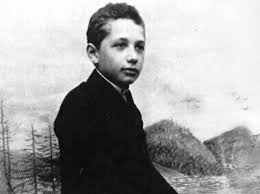
Further on, at the age of 15, he consequently quit school and moved to Italy along with his parents. In the year 1895, Einstein took the entrance exam for the Swiss Federal Institute of Technology. Although he failed, he was told to attend the Swiss school in Aarau. In this school, his thoughts and emotions were set free. They weren’t meant to memorize everything but to understand them. In this school, all the teachers were kind to him.
Einstein’s Older Life
Later, his thoughts fell on the Theory of Electromagnetism by James Clerk Maxwell. At 16, he wrote an essay explaining his desire to study theoretical Mathematics and Physics. Soon after, he graduated from the Swiss school in Aarau and shifted to the Engineering Institute of Zurich.
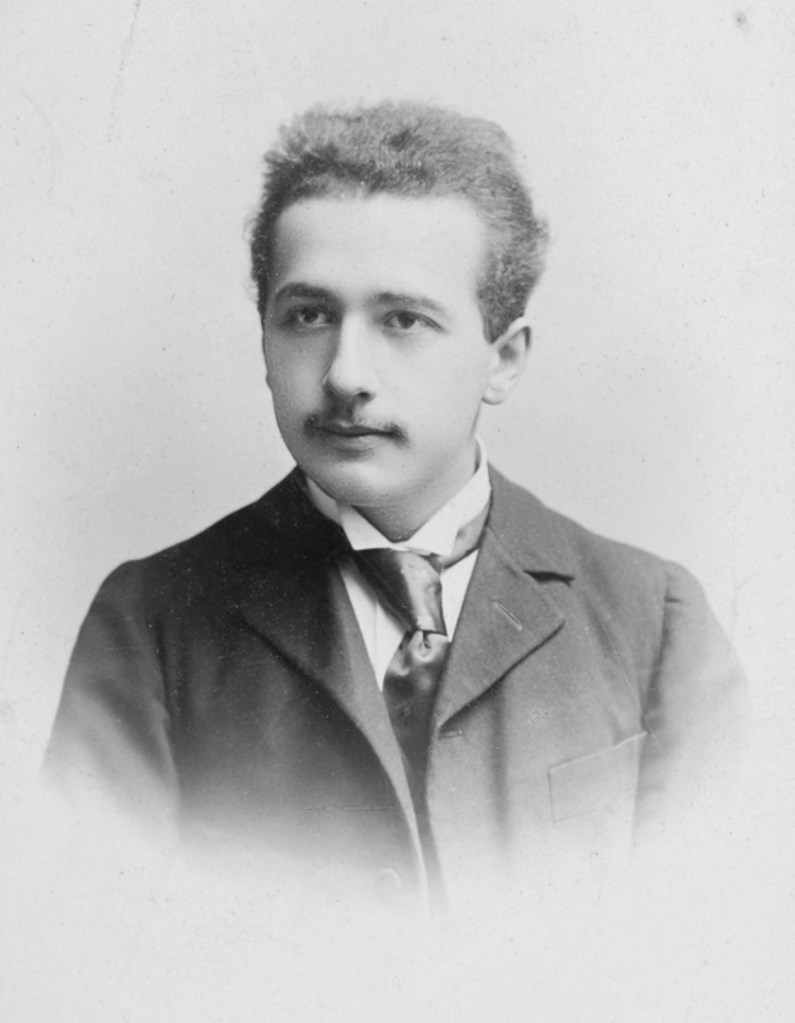
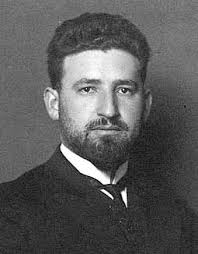
At that point in time, Einstein understood that his true passion was Physics. However, a deeper understanding of Mathematics could only be attained through the Engineering Institute in Zurich, which he joined in the year 1897. Soon after, he had a meeting with M. Grossman, G. Geissler and Eugene Grossman. His friend, M. Grossman, had truly realized the potential in Einstein. He would happily share the notes made by him in Mathematics. Einstein said, “I would rather not speculate on what would have become of me without these notes.”
Einstein’s Later Years
Einstein’s Love Life
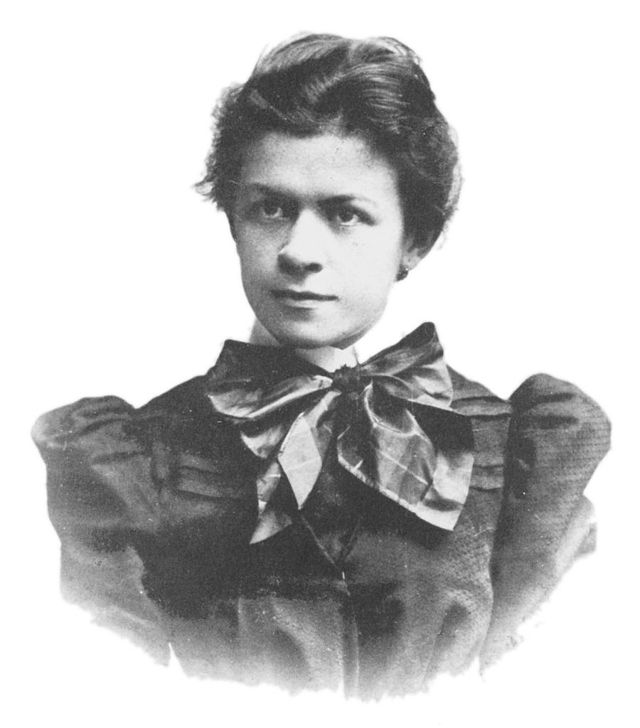
Albert Einstein and Mileva Maric fell in love while studying at Zurich Polytechnic. Maric was the only woman in Einstein’s Physics class. When Mileva turned 15, she was given special opportunities to study at an all-male preparation school. There, she scored the highest marks in Maths and Physics. Albert often called her “Dollie” and he was called “Johnny”. In 1900, both failed their final exams, but somehow, Einstein managed to get a Diploma. He was one of the few people with a diploma and yet unemployed. Mileva supported him financially and emotionally. About a year later, Einstein and his family went to Italy while Mileva stayed in Zurich as a lab assistant and prepared to retake her exam.
Einstein’s Work
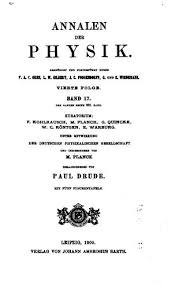
In the year 1902 at the age, Einstein got a job at the Swiss Patent Office in Bern and called it “a form of redemption”. Here, with encouraging work and a regular salary, Einstein was happy with the way his life was going. Parallelly, Einstein started writing research papers of his own. The following year, Einstein wrote his first research paper “Annalen der Physik”, which is one of the oldest Scientific journals. In May, the couple spent 3 or 4 days together at Lake Como.
Some weeks later, Mileva discovered that she was pregnant. She gave birth to Lieserl in Novi Sad, on 27thJanuary 1902 but Albert showed no interest in seeing the baby. In 1903 on the 6th of January, Einstein married Mileva and had their child Hans Albert in 1904.
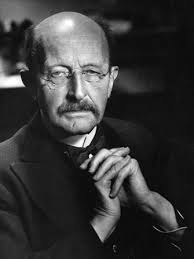
Einstein gained recognition in the scientific community with his research papers. He was subsequently appointed as an associate professor at the University of Zurich. Additionally, he was invited to present his findings at the German Scientists’ Annual Convention, where he had the opportunity to meet many individuals whom he had previously only known through their books and papers such as Max Plank (inventor of the Plank Constant, denoted by the letter ‘h’, in the equation “E = hv”)
Einstein’s Miracle Year
In 1905, Albert Einstein had his most significant breakthrough, known as his “annus mirabilis” or miracle year. During this year, he published four remarkable research papers. The first paper was on the Photoelectric Effect, the second was on Brownian motion, the third was on the Special Theory of Relativity, and the fourth was on mass-energy equivalence. Einstein predicted that releasing energy from a body would result in a corresponding decrease in the body’s mass. This concept, known as the equivalence between energy and mass, can be expressed in the equation E=mc².
Earning a PhD
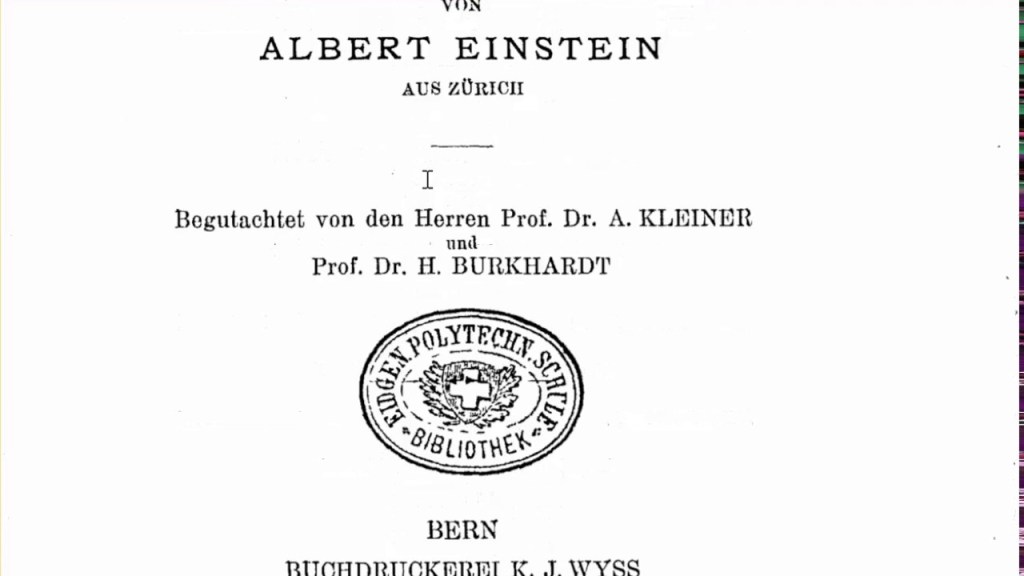
The following year in 1906, Einstein earned his PhD from the University of Zurich after publishing his research paper titled “A New Determination of Molecular Dimensions.” In this paper, he proposed the idea that light could behave like discrete particles of energy, similar to the particles of a gas. Although Max Planck had suggested this idea earlier, Einstein took it further than Planck ever could. This challenged the theory that light consists of smoothly oscillating electromagnetic waves. Einstein’s theory explained various phenomena, such as the reflection of light and a single point-like mark produced by light that interacts with a plate as a particle.
Reuniting with a Friend
Einstein shifted job posts from the Patent Office to a full-time teaching post at The University of Zurich, where he reunited with his close friend, M. Grossman, who helped Einstein learn advanced math theories and techniques for his research and development of a new theory of gravitation.
Reaching New Heights in Einstein’s Career
In 1914, Einstein was awarded membership in the Prussian Academy of Science and given a senior research position in Berlin in recognition of his exceptional work on the special theory of relativity. Berlin offered Einstein a wealth of opportunities to further his research. This was the highest degree that could be achieved in a scientific career.
The General Theory of Relativity
In 1915, Einstein’s theoretical work led to the development of new equations of gravity. Despite their unfamiliar mathematical form, the underlying simplicity of these equations became apparent. They showed that the mass of an object distorts the very structure of space and time. The accuracy of this theory was demonstrated when it was tested on Mercury’s anomaly in its orbit.
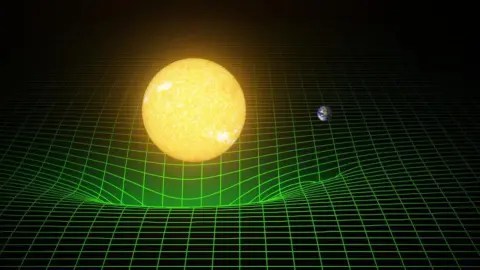
Einstein’s general theory of relativity also predicted a surprising phenomenon – that light bends around an object that distorts the structure of space-time. This deflection could be measured during a solar eclipse when the rays of light from the sun are not visible. British astronomers later tested this theory during a total solar eclipse. When the results matched Einstein’s equation, he was recognized for his ground-breaking work.
One of Einstein’s predictions was that gravity could absorb light rays that pass close to the sun, causing stars to appear as if their positions had shifted. During the solar eclipse, photographs taken by expeditions showed that the apparent location of stars near the sun differed from their position when observed in the sky elsewhere. Scientists observed a bending of space rather than just a ripple in a glass panel, which can be observed when objects look blurry through the glass.
Problems in Marriage
As Einstein’s scientific career skyrocketed, his relationship with his wife Mileva became strained. Mileva expressed that she felt neglected due to Einstein’s fame and lacked affection in their marriage. Feeling suffocated, Einstein began a romantic relationship with his cousin Elsa to seek comfort outside of his struggling marriage.
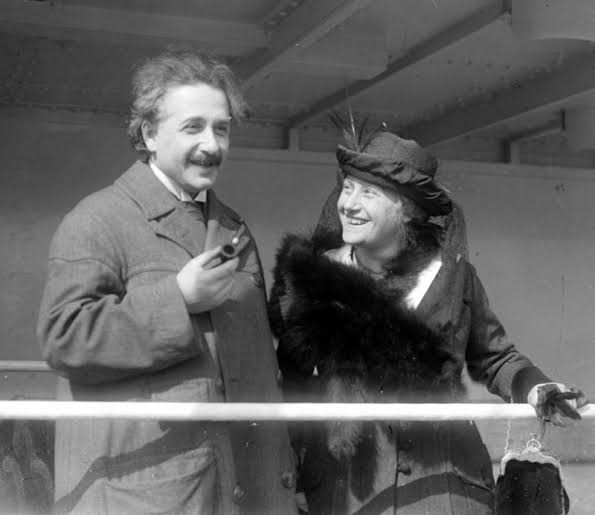
Mileva and Albert’s marriage went through a difficult phase in their marriage when they separated in 1914 and divorced in 1919. In the same year, Einstein got married to Elsa Lowenthal.
Victory of the Nobel Prize
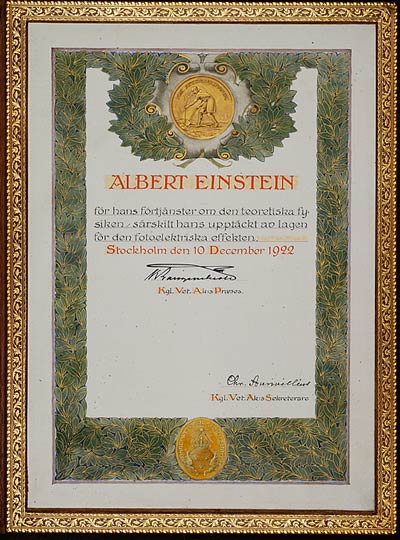
The victor of the 1921 Nobel Prize for Physics was none other than Albert Einstein. The Nobel Prize was given to him for his massive contribution to theoretical Physics and his discovery of the photoelectric law. There was a controversy regarding this as there was no mention of his Special and General Theory of Relativity.
Political Activism and Last Years
Situation in Germany
The political situation in Germany declined with the beginning of the First World War. Nationalism was attacked by Einstein. Furthermore, Einstein promoted peace values to prevent major scale wars. About 93 extremely smart people from Germany including physicists like Max Planck had signed a manifesto defending Germany’s war behaviour. On the contrary, Einstein and 3 other physicists signed an anti-war contract. Einstein contributed to creating a non-party alliance, fighting for peace and a supernational body to avoid future wars. Einstein said, “My pacifism is an instinctive feeling, a feeling that possesses me because the murder of men is disgusting. My attitude is not derived from any intellectual theory but it’s based on my deepest antipathy to every kind of cruelty and hatred.”
Einstein’s Travels
Even though Einstein was treated with great care in Berlin, he was frequently asked to travel to other European cities to deliver lectures on his special and general theory of relativity. He often travelled to his destinations in a third-class rail carriage. Despite this, he was highly respected as an exceptional physicist, and his lectures were incredibly successful.
During his travels, he visited not only the European capitals but also various places in Asia, the Middle East, and South Africa. According to his diary notes, he discovered nobility among the Hindus of Salon, purity of soul among the Japanese, and magnificent intellectual and moral merit among the Jewish settlers in Palestine.
Getting in Touch with Sigmund Freud
After moving to Germany, Einstein began corresponding with the famous Austrian psychiatrist Sigmund Freud. Einstein suggested that people have an innate thirst for hatred and destruction, which Freud agreed with. However, Freud did add that war was biologically unsound.
The Birth of the Big Bang Theory
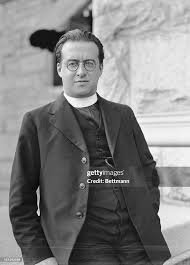
In the early 20th century, a Belgian scientist named Abbe Georges proposed a detailed theory about the creation of the universe. According to his theory, the universe was formed by the explosion of a primeval atom, which caused it to expand. Today, this theory is known as the Big Bang theory. Even Einstein, one of the greatest scientists of all time, applauded this theory and considered it to be the most satisfactory explanation of the creation of the universe.
Last years
Warnings of War
Despite Albert’s warnings about the war, people often ignored them. However, there were concerns about Einstein’s future and safety. He was transported from Belgium to England by a private yacht. By the time he arrived back in Princeton, Einstein was very old. A friend wrote that he had become deadened inside and was no longer laughing.
Einstein’s Death
Later, his condition weakened to the point where he could not play the violin or sail his boat. He was forced to give up smoking from his pipe due to abdominal pain that further caused him to regulate his diet. On 18th April 1955, Einstein passed away at the Princeton Hospital. In his life, his unfinished post written in memory of Israel’s Independence Day was kept at his desk.
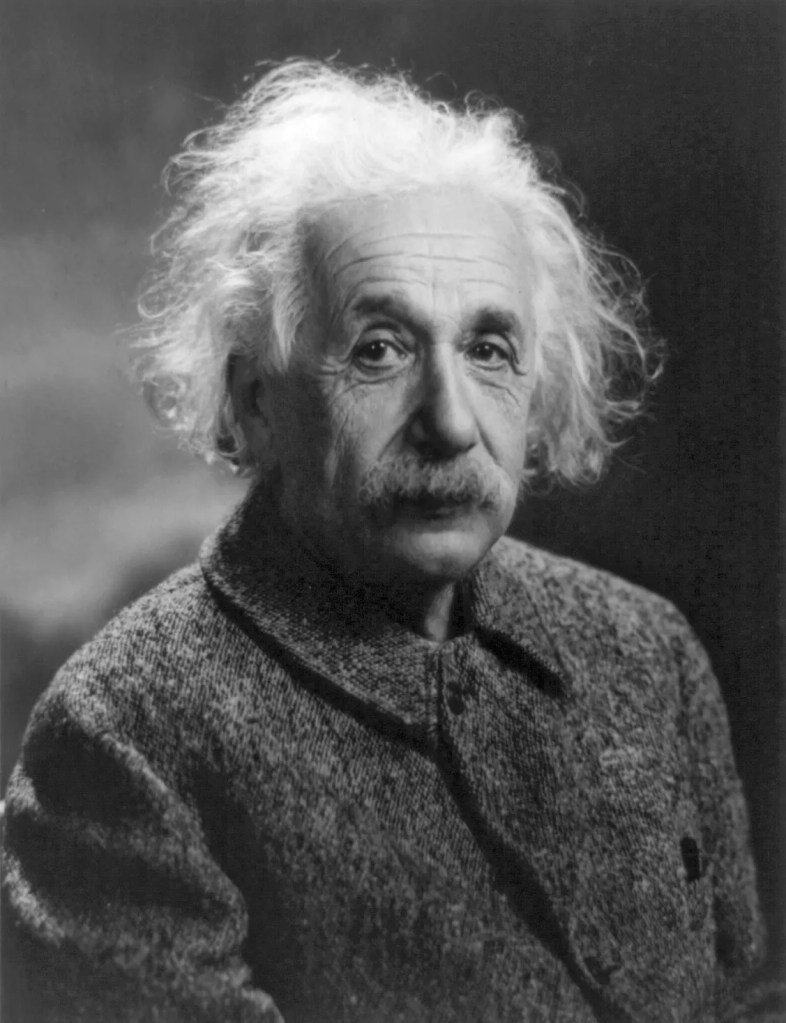
The most important thing he wrote, “politics was temporary, while an equation was eternal.”

 The Physics Phenomenon
Leave a comment