Introduction
Hello, everyone, I am Arav Bhasin, and I am back with some incredible news! Today, I’m excited to delve into a fresh and intriguing approach to understanding gravity centred around the concept of gravitons, the hypothetical particles believed to mediate the gravitational force. This theory represents a significant stride toward a comprehensive theory of quantum gravity, aiming to bridge the gap between the classical understanding of gravity and the principles of quantum mechanics.
Incompleteness of Newton’s and Einstein’s Theories
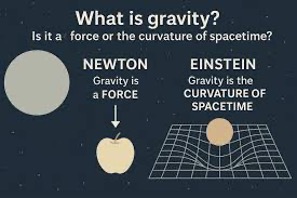
A lot of people think Einstein’s Theory of General Relativity is the ultimate take on gravity. If that were true, I’d be doing literally anything else right now — maybe even enjoying gravity instead of questioning it. To appreciate the significance of the new theory surrounding gravitons, it’s necessary to recognise the limitations of both Newton’s and Einstein’s theories of gravity. Newton’s law of universal gravitation was revolutionary in its time, providing a solid framework for understanding gravitational forces. However, it is fundamentally limited in scenarios involving massive objects and extreme conditions, such as near black holes or at very high velocities. Evidence from Mercury’s orbit, for instance, showed that Newton’s equations could not accurately predict the planet’s precession. This discrepancy was later resolved by Einstein’s General Theory of Relativity, which provided a more comprehensive understanding of gravity as the curvature of spacetime.
Einstein’s theory, while highly successful in explaining many gravitational phenomena, is also incomplete. It struggles with singularities, such as those found at the centre of black holes, and does not incorporate quantum mechanical principles, which govern particle behaviour at the smallest scales. While General Relativity can accommodate dark energy through the cosmological constant, it does not offer a deeper explanation for its origin or behaviour. These limitations underscore the need for a more unified theory that reconciles gravity with quantum mechanics.
Quantum Theory In Comparison to GR
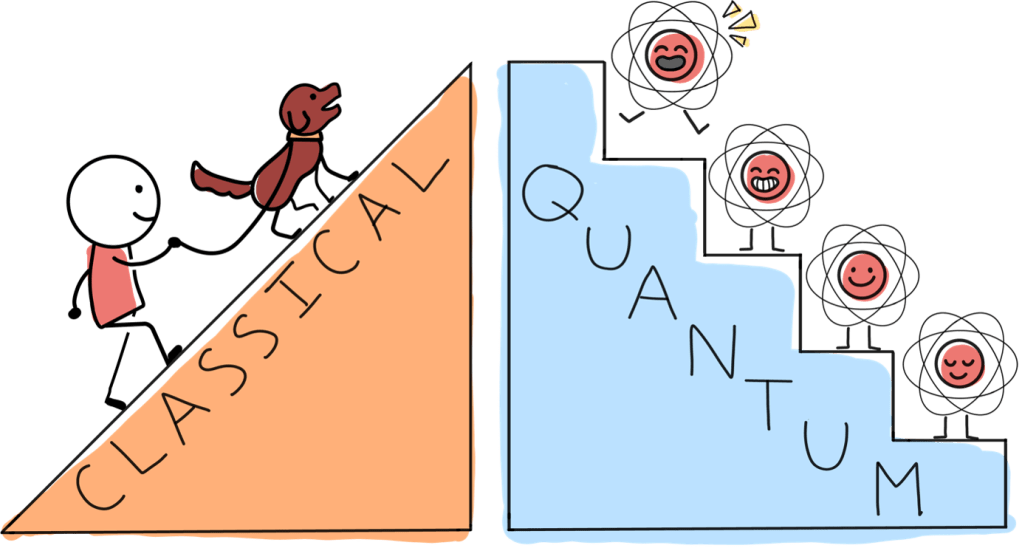
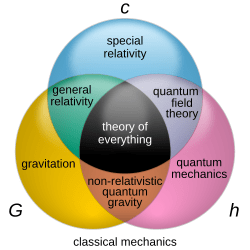
Quantum mechanics has been rigorously tested and has repeatedly proven to be accurate in predicting a variety of phenomena, such as the behaviour of particles and the properties of materials. Experiments like the double-slit experiment and tests of Bell’s theorem have confirmed key ideas, like wave-particle duality. As scientists work to combine General Relativity with the Standard Model—the closest we have to a unified theory—there is hope for a “theory of everything.” While General Relativity works perfectly on larger scales, it fails when it is brought to the quantum level or with highly energetic bodies (like black holes). If they succeed, this would not only resolve differences between these two cornerstones of physics but also provide deeper insights into the universe, potentially answering questions about dark matter and dark energy while linking gravity with quantum mechanics.
The Importance of a Theory of Quantum Gravity
This is where the idea of quantum gravity comes into play. A robust theory of quantum gravity is crucial for a comprehensive understanding of the universe. It could provide insights into the behavior of gravity at the quantum level, helping to explain phenomena that are currently beyond the reach of both Newtonian and Einsteinian physics, such as black hole information paradoxes and the behavior of space-time at Planck scales.
The Concept of Gravitons
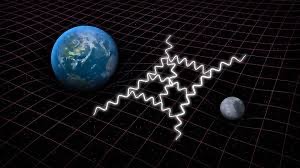
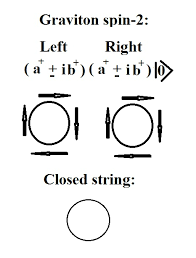
In the realm of particle physics, forces are transmitted through the exchange of particles. For instance, the electromagnetic force arises from photons exchanged between charged particles (you might have heard this in Young Sheldon!). Similarly, the theory posits that gravity operates through the exchange of gravitons, massless particles that would hypothetically carry the gravitational force. This idea aligns with the framework of quantum field theory, suggesting that all fundamental interactions involve quantum particles. Gravitons are predicted to be spin-2 particles, which mathematically results in gravity being always attractive, unlike electromagnetism, which has both attraction and repulsion due to its spin-1 carrier, the photon.
Advancing Toward Quantum Gravity
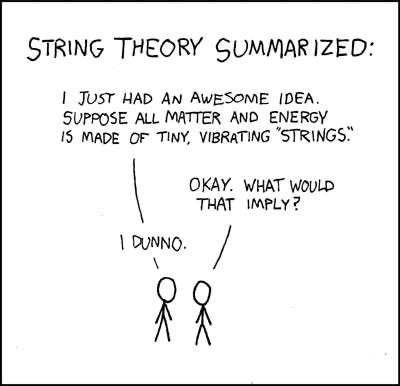
One of the most pressing challenges in modern physics is reconciling Einstein’s General Theory of Relativity with quantum mechanics. While General Relativity provides an excellent description of gravity at macroscopic scales, it falls short when addressing phenomena like black holes and the behaviour of particles at subatomic levels. Remember, the graviton is a result of string theory, as the graviton itself is a closed vibrating string. The introduction of gravitons into the equation offers hope for quantising gravity, thereby creating a pathway to a coherent theory of quantum gravity.
Scientific Scrutiny and Validation
As with any groundbreaking theory, the concept of gravitons will undergo rigorous scrutiny. Physicists globally will likely attempt to “poke holes” in this model, questioning its validity through theoretical experiments and observations. The scrutiny is essential—science progresses through examination and debate. Suppose the physicists of this theory, backed by solid experimental evidence, can convincingly defend their ideas against the criticisms raised. In that case, we may witness the rise of a new theory of gravity.
Evidence for the existence of Gravitons
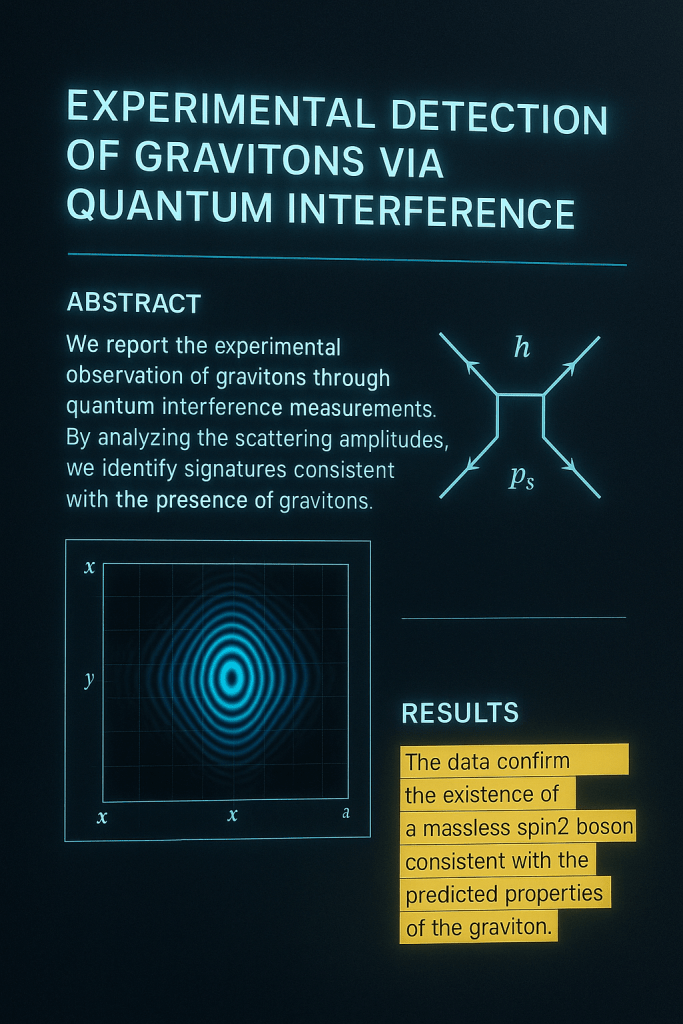
Currently, there is no direct proof of gravitons; they remain a theoretical prediction. However, there is indirect evidence that suggests gravity may be mediated by particles, similar to other forces in quantum field theory. For instance, gravitational waves, which were confirmed by LIGO in 2015, behave in ways that support the idea of gravity as a quantum field. If gravity is indeed a field, then according to quantum theory, it should have discrete particles—gravitons—just as the electromagnetic field has photons. Although the evidence is not truly direct, it proves that gravity can exist as a field. However, no experiment has yet successfully detected a single graviton because gravity is incredibly weak.
Conclusion
The exploration of gravitons offers an exciting frontier in the quest for a unified theory of gravity. While the journey ahead is filled with challenges and uncertainties, the potential to reconcile gravity with quantum mechanics could revolutionize our understanding of the universe. We are at the threshold of exciting discoveries, and with rigorous testing and evidence, the theory of gravitons may usher in a new era of physics! Stay tuned for more updates as this story unfolds!

 The Physics Phenomenon
Leave a comment