Hello everyone,
My name is Arav Bhasin and I love physics and maths. I study in Avalon Heights International School Navi Mumbai, and I am in 6th grade. Today, I am going to be writing about the concept of time dilation.
Among the many concepts that Einstein taught us, the General theory of relativity is by far the most correct and complete. In general relativity, there is one concept that changes the way we look at the world.
This concept is known as time dilation.
Newton thought that space and time were absolute. In his eyes, time and space could never be changed and were perfectly constant.
But Einstein and Newton don’t see eye to eye on many things, and this was one of them. What Einstein thought was that space and time are relative.
This meant that space and time can change according to the circumstances. As of now, lets speak about how gravity can change the ticking of time.
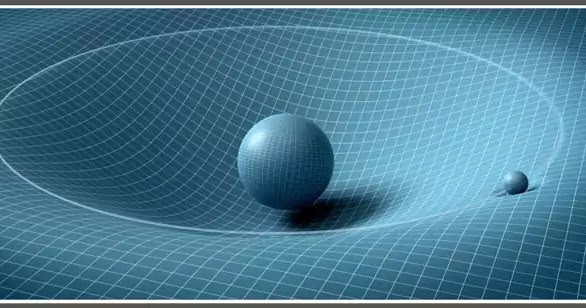
Now, what exactly is time dilation? Time dilation is the exact elapsed time that depends on the speed of the object or the gravitational potential of the area. Now let me ask you a question- If I keep clock A near Earth and clock B far away in the depths of space, which one would tick slower? Well, if you got the answer as clock B, you are absolutely WRONG!
See, when you place a clock close to a strong gravitational field, time starts to tick slowly compared to an area with not much gravitational potential, and I am going to tell you why.
Now, there is one thing that you should know before we embark on this marvellous journey is – the speed of light is a constant. Now, let us consider that the speed of light is 5 m/s. (This is just an assumption the actual speed of light is 299,792,458 m/s).
Light trajectory without intercepting gravitational fields
Let us also consider that we go from point A to point B through point C (please see figure 1 below for illustration).

Distance from A to B through C = 20 meters
Speed to travel = 5m/s
Time = Distance / Speed i.e. 20/5 = 4 s.
This, if you observe carefully, is not bent, so this means no gravitational field is intercepting.
Light trajectory in intercepting gravitational fields.
But if you go from point A to point B through point D present in a gravitational field, the light will travel the bent space-time mesh as illustrated in Figure 2 below.

Now if we see, the lengh of A to B through D is going to be a little longer that A to B through C as A to B through D has an arc and both have the same end point.
If we consider that
Distance from A to B through D = 25 meters (5m more due to curved space-time),
Speed of travel = 5m/s
Time taken to travel = 25/5 = 5s ≠ 4s (as calculated above).
Now, you might be thinking, “But how can you change time?”. Now, the thing is that time itself warps and starts to slow down to keep the speed of light a constant.
Conclusion
So, we gather from the above example that if the distance is longer and speed is the same, time will increase.
This should have happened in our case too. When the distance increased from 20 meters to 25 meters in space intercepted with gravitational fields, the time should have increased from 4 seconds to 5 seconds, but it did not. Rather the time itself slowed down, which we call as “Time Dilation”.
Therefore, in a strong gravitational field, like near a black hole, time starts to slow down as also shown in the movie Interstellar.
Regards
Arav Bhasin
PS: This is my first post and I sincerely hope that you enjoyed reading it.
Do share your ideas in the comments section and please subscribe to stay in the loop. Looking forward…



 The Physics Phenomenon
Leave a reply to Uma Cancel reply