Hello, and welcome back to my blog post. Today, I am back with some interesting update on India’s Lunar missions “Chandrayaan”.
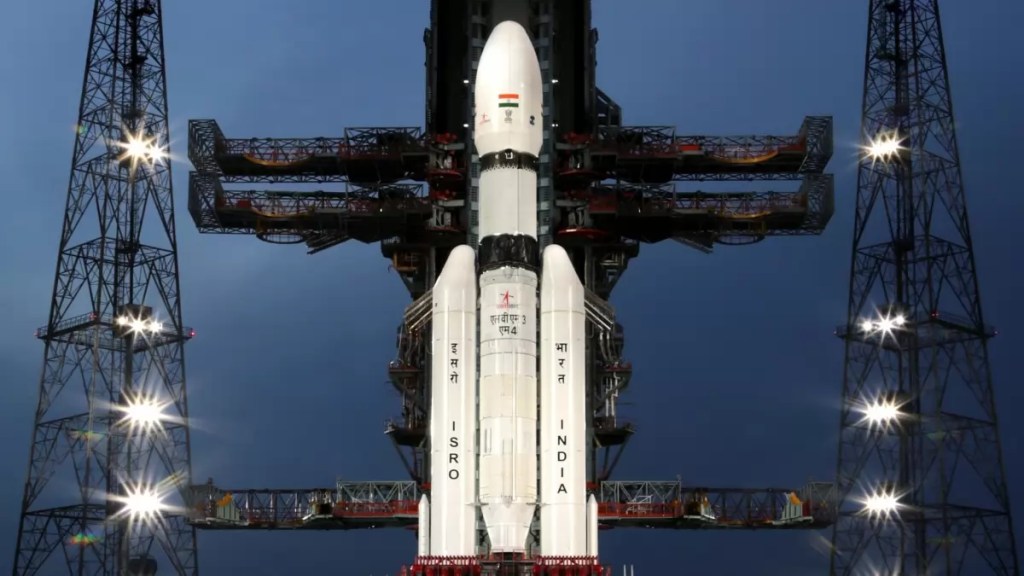
As we all know, Chandrayaan 3 is the present pride of India in the space domain, but before this, 2 other missions led to the build-up of this fantastic one. These two are none other than its older siblings – Chandrayaan-1 and Chandrayaan-2.
Chandrayaan 1
Chandrayaan 1 was launched on 22nd October 2008 and its model type was a PSLV- XL (Polar Satellite Launch Vehicle). The main purpose of sending it up and above the clouds was to confirm the presence of water on the moon. It was relatively simpler mission and had less chances of failure as it was an Impact Mission, a mission where a part of the moon orbiter, called the Moon Impact Probe, is sent to analyse everything on the moon.
For that reason, the MIP (Moon Impact Probe) had a payload called CHACE (Chandra’s Altitudinal Composition Explorer), a mass spectrometer taking readings every 4 seconds on the MIP’s descent. It also has the M3 (Moon Mineralogy Mapper), a payload supplied by NASA to analyse the soil and dust components of the moon. The point where the MIP crashed was in the Shackleton crater and the exact place where it crashed was known as Jawahar Point.
Chandrayaan-1 made one of the most path breaking discoveries of conclusively discovering traces of water on the moon. It also discovered water ice in the North polar region of the Moon. It also detected Magnesium, Aluminium and Silicon on the lunar surface.
I am confident that more and more moon missions would now explore the unexplored southern region of the moon and pave the way for our future missions to explore our solar system, Milky Way and our Universe (or multiverse, who knows? 😉)
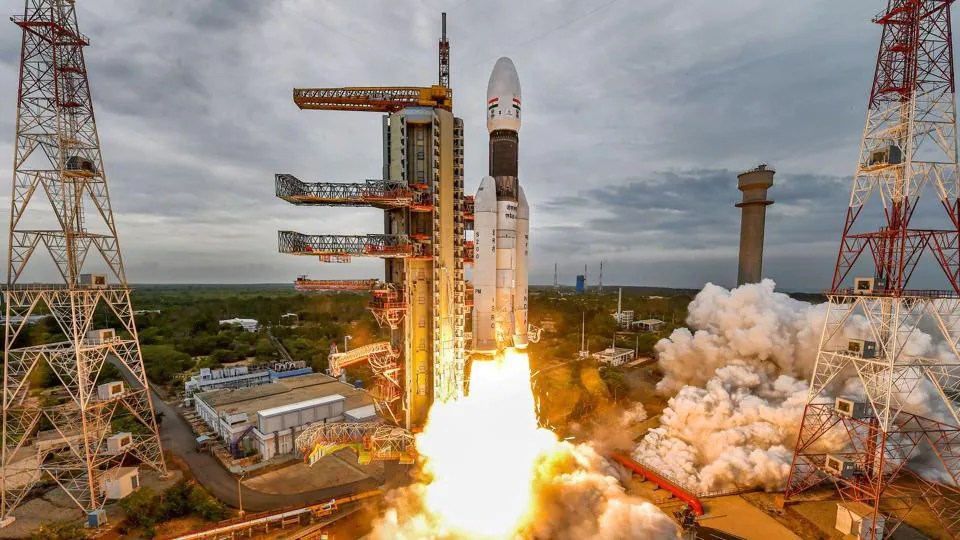
Chandrayaan 2
Launched on 22nd July 2019, was a mission meant to land softly on the moon. It was a mission made to send a rover around the South Pole of the moon and to reconfirm the traces of water on the moon. Payloads such as
- RAMBHA (Radio Anatomy of Moon Bound Hypersensitive Ionosphere and Atmosphere),
- ChaSTE (Chandra’s Surface Thermo physical Experiment); and
- ILSA (Instrument for the Lunar Seismic Activity)
were all supposed to be used, but were unable to as the mission failed.
Now you might be wondering how it failed, right? Well, when the Moon lander was close to the moon, its vertical and horizontal velocity should have been close to zero, but the velocity was actually pretty high. According to ISRO, this happened because of the misalignment of the thrusters, causing the rough braking phase to be unsuccessful. Did you know that the landing area for Chandrayaan 2 was just a 500m by 500m spot which could also be one of the reasons for its failure to land. ISRO called it a half-success as the orbiter was still orbiting the moon.
And to top all of that up, ISRO, which was previously very transparent with the Indian citizens lied and said that the spacecraft was on the moon in ‘one piece’, just horizontally, but when the pressure really increased by Indian citizens, ISRO finally let the weight of their chest and admitting that is was on the surface of the moon in pieces in January.
Chandrayaan 3
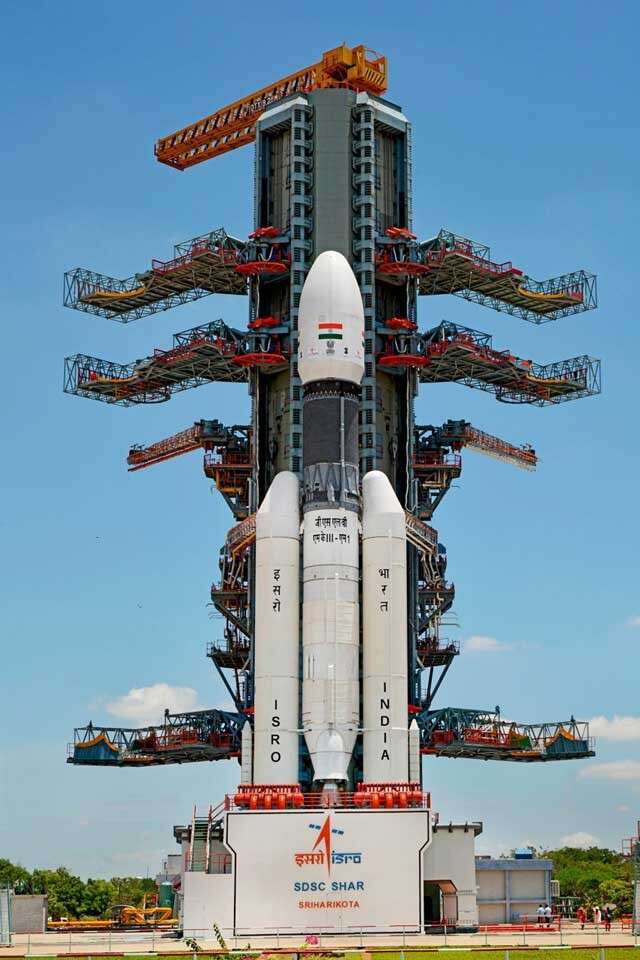
“Sir, we are on the moon,” said S. Somnath, telling PM Narendra Modi that India was successfully on the moon. Chandrayaan 3, launched on 14th July 2023 and was a GSLV model. Its mission was yet again a soft landing on the moon and was a rover mission with many payloads such as
- ChaSTE & ILSA same as Chandrayaan 2;
- Langmuir Probe (LP) to estimate the plasma density and its variations.
- A passive Laser Retroreflector Array from NASA is accommodated for lunar laser ranging studies and Alpha Particle X-ray Spectrometer (APXS); and
- Laser Induced Breakdown Spectroscope (LIBS) for deriving the elemental composition in the vicinity of the landing site.
This mission, as every Indian knows, was an absolute success landing at 6:06 pm, Wednesday, August 23, 2023 keeping me hooked! There were many major improvements that made this lunar mission a success. Firstly, the landing area was increased from a 500m by 500m box to a 4km by 2.4km area which means that it could land anywhere in that place. Secondly, the thrusters were given more fuel, which means that they could hover longer to find just that sweet landing spot!
Also, did you know that the Vikram Lander did a sort of hop on the moon? What the lander really did was that it went up 40 cm in the air and came back to the lunar surface and the funny thing is that wasn’t even planned! The surprises didn’t end there. ISRO also recently demonstrated a trajectory to bring back a spacecraft from the Moon to Earth orbit, that too using left-over > 100kg fuel in the propulsion module. After a slew of manoeuvres through Oct & Nov-23, on 4 December 2023, ISRO declared that the propulsion module is now in a high orbit around the Earth.
Chandrayaan-3’s lunar dance, though brief lasting 14 earth days, was a dazzling display of scientific prowess! Its instruments, like skilled celestial detectives, unearthed a treasure trove of lunar secrets before returning home. They confirmed the long-suspected presence of sulphur, a fingerprint of the Moon’s ancient past. They charted the dramatic temperature fluctuations on its surface, revealing hidden layers of mystery. They even listened to the Moon’s rhythmic pulses through moonquake detections, adding another beat to its cosmic symphony.
Chandrayaan 4
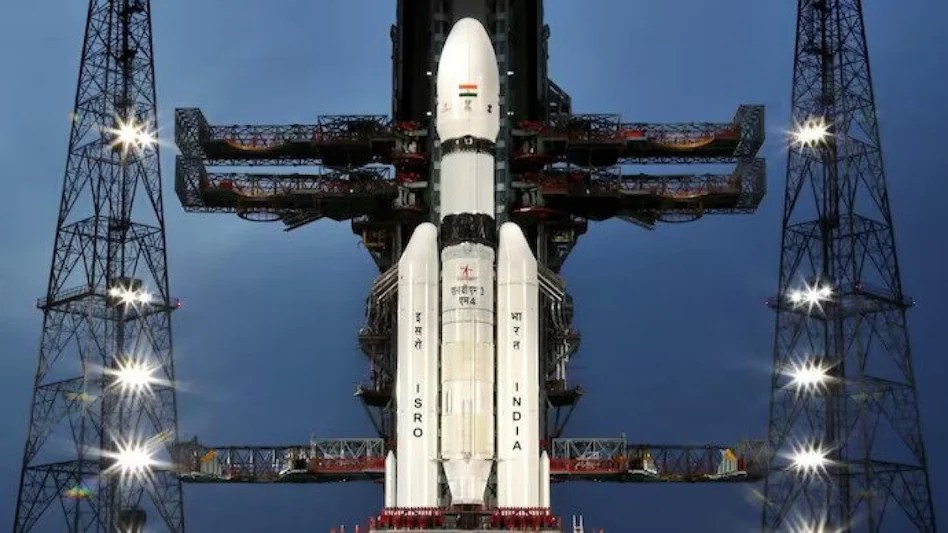
With the invaluable discoveries of Chandrayaan-3 already enriching our understanding of the Moon, future missions are poised to take giant leaps further. ISRO has already declared that the Chandrayaan 4 will be a lunar sample-return mission consisting of four modules namely Transfer module (TM), Lander module (LM), Ascender module (AM) and Reentry Module (RM) with the planned mission life is 1 lunar day, and landing site near to Shiv Shakti Point, the landing site of Chandrayaan-3‘s Lander.
And beyond…
From the soaring heights of Chandrayaan-1’s lunar orbit to the poignant echoes of Vikram’s landing, Chandrayaan has reminded us that even the most ambitious journeys sometimes face unexpected turns. Yet, within the data gathered, the lessons learned, and the stories told, lies a wealth of knowledge and experience that shapes our understanding of ourselves and our place in the cosmos.
These groundbreaking discoveries of Chandrayaan missions, like moonbeams illuminating the unknown, have rewritten our lunar story and paved the way for future moonwalkers.
As I finish this blog, the rover is asleep and remains as India’s and the whole mankind’s ambassador on our beloved moon. Chandrayaan-3 may have touched down for a short visit, but its scientific bounty will echo through the ages, forever enriching our understanding of our celestial neighbour.
Every Chandrayaan mission feels like a personal victory, a testament to the determination, curiosity and innovation of one and all Indians. I just can’t wait for what’s in store next in the Indian lunar journey, and hopefully contribute in our upcoming Chandrayaan missions one day.
Signing off, for now..
Arav


 The Physics Phenomenon
Leave a reply to Anupam Srivastava Cancel reply